Qtree Technologies
Job Assured Devops Master Program
Master AWS Cloud, DevOps & Infrastructure Automation with Real-Time Projects and Placement Support
Certifications



 Job Oriented Syllabus
Real Time Projects & Hands-On Labs
100% Assured Interview Guarantee
Resume + Interview Preparation
Why Devops Training
in 2026
The DevOps Master Program is a comprehensive, hands-on course designed to help learners master modern software delivery and deployment practices. It covers core DevOps concepts, CI/CD pipelines, Git, Jenkins, Docker, Kubernetes, Terraform, Ansible, and cloud integration with real-time project implementation. The program focuses on automation, collaboration, and infrastructure management to prepare learners for industry-ready DevOps roles.
Class Formats

Classroom
In-person sessions conducted at our training center.
Online
Instructor-led virtual classes in real time.
Self Paced
Learn anytime with recorded video sessions.
One to One
Learn anytime with recorded video sessions.
Register for Devops Master program
Syllabus
- Define DevOps
- What is DevOps
- SDLC Models, Lean, Agile
- Why DevOps?
- History of DevOps
- DevOps Stakeholders
- DevOps Goals
- Important Terminology
- DevOps Perspective
- DevOps and Agile
- DevOps Tools
- Configuration Management
- Continuous Integration, Continuous Deployment and Continuous Delivery
- What is Cloud Computing
- Characteristics of Cloud Computing
- Cloud Implementation Models
- Cloud Service Models
- Advantages of Cloud Computing
- Concerns of Cloud Computing
- What is Virtualization?
- History of Virtualization
- What is Hypervisor?
- Types of Server Virtualization
- Benefits of Virtualization
- Important Virtualization Products
- Version Control Systems
- Local, Centralized and Distributed
- Installing Git on Linux
- Installing Git on Windows
- Initial Setup
- Creating Repository
- Cloning, Check-in and Committing
- Fetch, Pull and Remote
- Branching
- Introduction to Jenkins
- CI/CD Concepts
- Continuous Integration and Continuous Delivery
- Installing and Configuring Jenkins
- User Management and Security
- Adding a Jenkins Slave
- Plugin Manager
- Freestyle Project Configuration
- Source Code Management and Git Plugin
- Git Hooks and Build Triggers
- Parameterized Projects
- Upstream/Downstream Projects
- Folders and Views
- Pipelines
- Jenkinsfile
- Configuring and Running a Pipeline
- Artifacts and Fingerprints
- Multibranch Pipelines
- Tagging
- Notifications
- Shared Pipeline Libraries
- Unit Testing with JUnit
- Deploying to Apache
- Functional Testing
- Jenkins CLI
- Jenkins REST API
- Jenkins Master with Docker
- Introduction to SonarQube
- Why SonarQube?
- SonarQube vs SonarCloud
- Configuring Code Analysis
- Integrate Sonar with Jenkins
- Quality Gates Handling
- Pipeline Fail on Quality Gate Failure
- Introduction to JFrog
- Create an Artifact
- Deploy Application to Artifact
- Integrate JFrog with Jenkins
- Upload Artifact to Public Cloud
- Download Artifact in Jenkins from Cloud
- Introduction to Terraform
- Why Terraform?
- Provision Infrastructure using Terraform
- Create Resources in AWS using Terraform
- Integrate Terraform with AWS
- Terraform Plan, Apply and Validate
- Introduction to Ansible
- Installation
- Ansible Playbooks
- Ansible Vault
- Ansible Modules
- Integrate Ansible in AWS Cloud Instance
- Kubernetes Cluster Architecture
- Introduction to Kubernetes
- Spinning up Cluster on Ubuntu VMs
- Exploring the Cluster
- Understanding YAML
- Creating Deployment using YAML
- Creating a Service in Kubernetes
- Installing Kubernetes Dashboard
- Deploying App using Dashboard
- Rolling Updates in Kubernetes
- Container Orchestration
- What is Docker
- Use Case of Docker
- Platforms for Docker
- Docker vs Virtualization
- Docker Architecture
- Important Docker Components
- Installing Docker on Linux
- Installing Docker on Windows
- Docker Commands
- Docker Hub
- Downloading Docker Images
- Running Docker Images
- Running Commands in Container
- Running Multiple Containers
- Creating Custom Image
- Running Container from Custom Image
- Publishing Custom Image
- Accessing Containers
- Linking Containers
- Exposing Container Ports
- Container Routing
Join our community to get updates about job opportunities, hiring drives, important announcements, and exclusive insights — all completely FREE.
Join WhatsApp CommunityWhat You Will Build During the Course
Design and implement end-to-end GitLab CI/CD pipelines for Dockerized applications deployed on AWS EC2
Automate container build, testing, and deployment using GitLab Runners, Docker, and AWS EC2
Provision and manage AWS infrastructure using Terraform integrated with GitLab-based DevOps workflows
Deploy and manage static websites using AWS S3 and CloudFront with automated, versioned CI/CD releases
Build secure CI/CD workflows for serverless applications using AWS Lambda with Docker-based packaging
Integrate AI-driven monitoring, automated testing, and intelligent security analysis within GitLab CI/CD pipelines on AWS
Program Benefits
100% Job Assistance until you are placed.
Hands-on project training with project building (3 to 5 projects).
Dedicated individual placement communication (no WhatsApp group notifications).
Corporate curriculum updated every year based on previous hiring trends.
Interview preparation (Aptitude, Communication, and Online Assessments).
Multiple mock interview rounds (based on current and previous experience).
ATS-friendly CV optimization (Naukri and LinkedIn).
Profile boosting strategies for job-search platforms.
Free LMS access for one year (CV preparation and self-assessments).
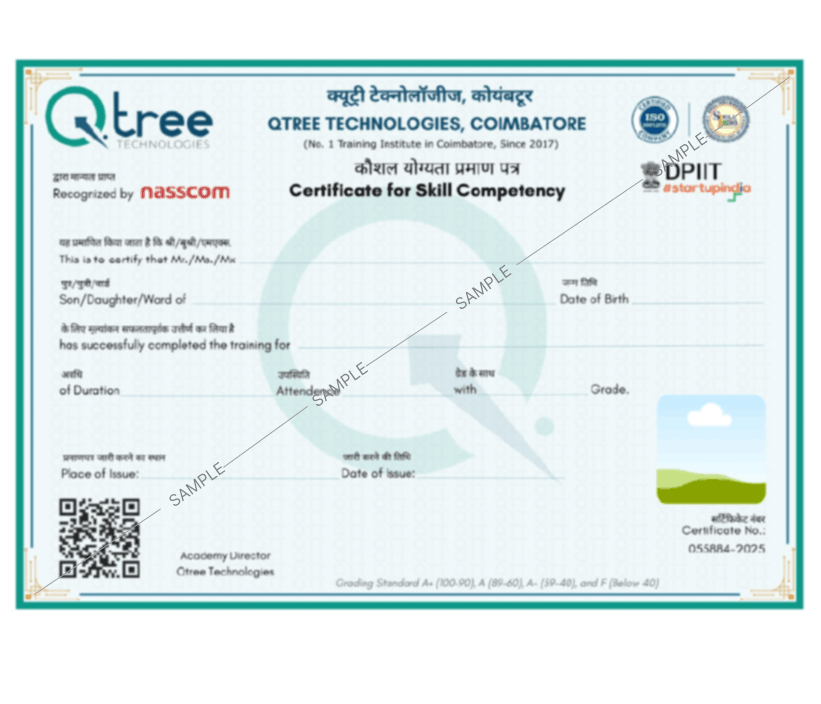
Registered and authorized course completion certificate with ISO standards and government recognition, available for lifetime verification.
Voices of Our Learners


Hiring Companies


























































FAQ for Devops Master program
Yes, QtreeTechnologies also provides the best DevOps training via online as well. The benefits of our online training are as follows:
- DevOps classroom, online and corporate sessions are handled by experts in the technology.
- Our project-oriented training program helps you experience working on live projects through online sessions as well.
- Each and every session is conducted live — no boring recorded sessions.
- The DevOps online course starts from scratch, helping you clearly understand the core concepts of the technology.
Sure, you can! You can book a free demo session with our trainer.
- Sit in an existing batch to understand the trainer’s teaching methodology.
- Interact with previous batch candidates for feedback.
- Attend a counseling session with our placement team members.
Yes, we provide 100% placement assistance with this DevOps course.
- Resume building support.
- Weekly assessments.
- Separate WhatsApp group for updates.
- Weekly job notifications.
- Mock interviews at the end of the training.
- Guidance for official certifications.
According to recent industry reports, the average salary of a DevOps engineer in India is approximately ₹6,18,282 per year.
- High demand for professionals with 1 to 4 years of experience.
- Strong growth in cloud and automation-based roles.
Our DevOps course covers essential industry tools including:
- Docker
- Puppet
- Chef
- Ansible
- Nagios
- Kubernetes
Explore the Program in Detail
Get complete information about the course and career opportunities.